The 8 Questions Every Issuer Must Answer Before Picking a Tokenization Vendor
Eight structural questions that determine whether your tokenization project succeeds or stalls. Score your readiness in three minutes on Stobox Compass – newly launched April 27, 2026.
TL;DR · Stobox Compass just launched Most tokenization projects do not fail at the smart contract. They fail months earlier – when an issuer picked a vendor before knowing what they were buying. Eight structural questions separate ready issuers from unready ones. Stobox Compass
runs all eight automatically in three minutes, free.
Why this matters
After eight years building tokenization infrastructure at Stobox, $300M+ tokenized, and 100+ issuances, the failure pattern is consistent. Every stalled project skipped some version of the same readiness check.
The good news: the check is mechanical. Eight questions, asked honestly, will tell you whether you are ready to tokenize, close to ready, or not ready at all. The bad news: most tokenization vendors will not ask these questions because asking them risks the deal. Vendors are paid to mint tokens. Asking whether your structure is right enough to mint is a different conversation – and one most vendors avoid.
This article is the methodology, published in full. The tool that runs it automatically is Stobox Compass. Either way, answer these eight before you commit to anything.
Question 1 – What exactly are you tokenizing?

Not "my building" or "my fund." The legal claim tied to the asset.
Are you issuing equity in a holding entity? A debt instrument secured against the asset? A pro-rata claim on a defined cash flow? A convertible or hybrid?
Each answer implies a different wrapper, a different securities exemption, a different investor base, and a different token contract configuration. Issuers who say "we'll figure that out with the platform" add three to six months to the timeline and pay legal fees twice.
Why issuers get this wrong: Tokenization marketing conflates "the asset" with "the token." The token does not own the asset. A legal entity does. The token represents a claim on that entity or its cash flows. Until you can state in one sentence what the claim is, you cannot tokenize it.
What a broker or LP would flag: "What exactly is the investor buying?"
For background on the difference between security tokens, utility tokens, and asset-backed tokens, see What is an STO? and the complete asset tokenization guide.
Question 2 – What wrapper holds the asset?
Most tokenization projects don't fail at the smart contract. They fail months earlier – when an issuer picks a vendor before knowing what they're buying.
Share on X Share on LinkedInThe wrapper is the legal entity – Delaware LLC, Luxembourg SCSp, Cayman LP, Wyoming DAO LLC, Irish ICAV, BVI vehicle. It is completely separate from the securities exemption you use to sell the tokens.
The wrapper decides: who can legally hold the token, what tax treatment applies, what fiduciary duties the sponsor carries, and how the entity is recognized in cross-border transactions.
Why issuers get this wrong: They Google "how to tokenize" and see articles that mix Reg D with SPV as if they were the same decision. They are not. Reg D is how you sell. SPV is what holds the asset. You pick both, independently, and the combination matters.
What a broker or LP would flag: "What jurisdiction is the issuing entity, and what is the investor actually a holder of?"
Question 3 – Which securities exemption governs the sale?
This governs how you sell and to whom – independent of the wrapper question.
US exemptions:
- Reg D 506(c) – unlimited raise, accredited investors only, general solicitation permitted
- Reg D 506(b) – unlimited raise, up to 35 non-accredited investors, no general solicitation
- Reg S – offshore investors, no US solicitation
- Reg A+ – up to $75M per year, retail-eligible, SEC qualification required
- Reg CF – up to $5M per year, retail-eligible
EU raises typically use national private placement regimes under the Prospectus Regulation, with MiCA layered on for the crypto-asset characteristics of the token.
Cross-border deals usually run a dual track – Reg D for US accredited, Reg S for non-US, with the token contract enforcing the eligibility split automatically.
Why issuers get this wrong: They pick the exemption last, after structure and marketing are set. The exemption then forces a rework because the investor base they wanted to reach isn't eligible under the chosen exemption.
What a broker or LP would flag: "Is this Reg D 506(c)? If so, how are you verifying accreditation? If 506(b), how are you sourcing without general solicitation?"
Reality check: If you are not 100% certain how Question 2 and Question 3 differ for your specific deal, run Stobox Compass. The diagnostic separates them automatically and tells you which combinations actually fit your investor base.
Question 4 – Who can hold this token, and how does the contract enforce that?
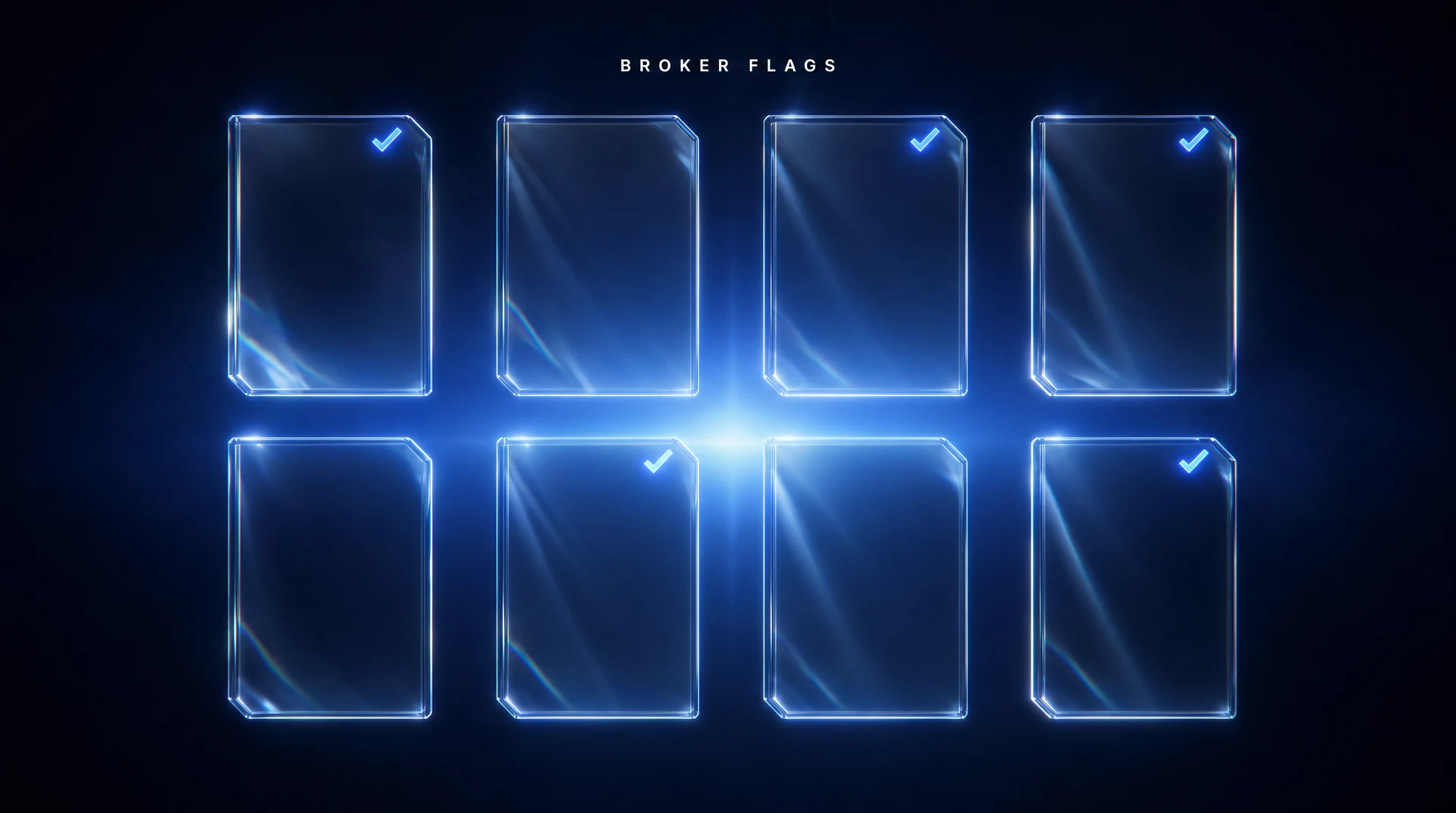
Once the wrapper and exemption are locked, the token contract has to enforce them. Automatically. At every transfer. Forever.
This includes: accredited / professional / qualified investor verification, jurisdiction restrictions (US-only, non-US-only, EU-only), lockup periods (typically 12 months for Reg D, shorter for Reg S), maximum investor count caps (e.g., the 35-investor ceiling under Reg D 506(b)), and forced-transfer logic for court orders, regulatory actions, or compliance events.
This is what security-token standards built for institutional use are designed to do. A plain ERC-20 cannot do this. An NFT cannot do this. The token standard is not a technology preference – it is a compliance requirement. Stobox STV3 is the standard the Stobox platform uses. Stobox is also a contributor to the ERC-7943 industry standard for institutional RWA tokenization.
Why issuers get this wrong: They accept a vendor's claim that "the platform handles compliance" without asking how the contract enforces it. When the first investor tries to transfer to an ineligible counterparty, they discover the enforcement was off-chain and manual. Which means not enforcement.
What a broker or LP would flag: "Show me the transfer-restriction logic at the contract level."
Question 5 – How do investors identify themselves, onboard, and re-use that identity?
Vendors are paid to mint tokens. Asking whether your structure is right enough to mint is a different conversation – and one most vendors avoid.
Share on X Share on LinkedInEvery investor passes KYC and AML. The question is how, how fast, and whether it is re-usable.
The failure case: investors do a full KYC for every new offering, drop-off rates hit 40–60%, and the issuer's primary raise slows to a crawl because onboarding is the bottleneck.
The better case: decentralized identity (DID). An investor onboards once, passes KYC/AML once, receives a verifiable credential tied to their wallet, and that credential is checked by every token contract they interact with. Stobox DID provides this layer – meaning an investor verified for one Stobox-issued asset onboards to the next one in minutes, not days.
This compounds. Every new investor onboarded to the Stobox ecosystem is an investor your next deal can reach faster.
Why issuers get this wrong: They treat KYC as a line-item cost instead of an infrastructure decision. Then they lose a quarter of their pipeline at the onboarding step.
What a broker or LP would flag: "What is your investor onboarding drop-off rate, and how do you reduce it?"
Question 6 – What happens in secondary trading?
The mint is not the milestone. Secondary liquidity is.
The question is whether your token can actually trade after the lockup ends, and through what venue. For US tokens post-lockup, the venue is typically an Alternative Trading System (ATS) registered with the SEC and FINRA. For EU tokens, it depends on the national regime and whether a regulated trading facility is available.
In every case, the secondary venue has to accept your token's compliance configuration – meaning the transfer restrictions, eligibility checks, and jurisdictional rules baked into the contract have to match what the venue can enforce. If they don't, your token is technically tradable and practically not.
The Stobox infrastructure connects primary issuance to regulated secondary-market access through partnerships with licensed ATS operators. See the tZERO partnership for one example of how this connects.
Why issuers get this wrong: They assume "on-chain means liquid." A token transfer on a blockchain is fast. A legal transfer of a security with proper investor checks, settlement, and record-keeping is a different thing entirely. The venue is what bridges the two.
What a broker or LP would flag: "Where does this token trade after lockup?"
Question 7 – Who distributes this to investors?
The question most tokenization pitches never answer.
Minting a token does not put it in front of investors. Issuers need one or more of: a direct marketing program (subject to the exemption's solicitation rules), a placement agent relationship, a broker-dealer network, an existing LP base willing to migrate on-chain, or opt-in access to a tokenization partner's broker network.
Stobox issuers can opt into the Stobox broker network – distribution partners who already transact in tokenized real-world assets and have investor mandates looking for inventory. Not a closed marketplace. A vetted network that will underwrite Stobox-issued assets because the structuring and compliance work has been done to their standard.
Why issuers get this wrong: They treat distribution as a month-three problem. By the time they realize nobody is buying, the window to plan has closed.
What a broker or LP would flag: "Who is this being distributed to, and are those channels configured before mint?"
Question 8 – What is the ongoing compliance and reporting cadence?
Tokenized securities are still securities. Ongoing obligations: periodic investor reporting, cap-table maintenance, regulatory filings (Form D for Reg D, ongoing Reg A+ reporting, EU disclosures), tax documentation, AML monitoring on transfers, and corporate actions handling for distributions, redemptions, and any token events.
A tokenization platform worth working with handles most of this programmatically. A tool that stops at mint leaves you administering the back office yourself. Stobox 4 handles ongoing cap-table management, distributions, investor communications, compliance monitoring, and corporate actions as core functionality – see the complete Stobox 4 platform guide for what that includes.
Why issuers get this wrong: They evaluate tokenization vendors on mint cost. Mint is 10% of the total effort. Ongoing operations are 90%.
What a broker or LP would flag: "What does operating this for five years look like, and who's doing it?"
How to score yourself honestly
| Score | Status | What to do |
|---|---|---|
| All 8 answered clearly | Ready to tokenize | Talk to Stobox or another serious infrastructure provider. Structuring is sound. |
| 5–7 answered | Close, but with gaps | Gaps are usually in Questions 6, 7, 8. Fix pre-mint in 2–4 weeks; post-mint takes 2–4 months. |
| Fewer than 5 answered | Not ready | Do the structural work first. No vendor will tell you this. Compass will. |
What Compass does automatically
Stobox Compass is these eight questions, run automatically, with a score and the 2–3 structural gaps a broker or LP would flag first. Three minutes. Free.
Compass is not a sales funnel. It is a diagnostic. Some issuers run it and are ready – those typically move to a structuring conversation with the Stobox team. Some run it and find significant gaps – those go back to counsel for six weeks, fix the structural work, and come back. Both outcomes are good outcomes. The bad outcome is the issuer who skips the diagnostic, picks a vendor on mint price, and discovers the gaps in month three.
Frequently asked questions
Do I need to answer all 8 questions before talking to Stobox?No. Compass tells you where you stand. If you are not ready, the diagnostic identifies the specific gaps. You fix those, then come back. Is Compass really free?Yes. No credit card. No sales call required. Three minutes. What if I'm comparing tokenization vendors?Compass gives you a vendor-agnostic readiness score. The questions apply regardless of which platform you ultimately choose. How long does the readiness assessment take?Three minutes if you know your structure. Longer if you discover gaps mid-question – which is the point. What happens after I get my Compass score?You see the score, the gaps, and recommended next steps. If you want to talk to Stobox, the option is there. If not, you have what you need to make decisions.Before you pick a vendor
If you are thinking about tokenizing – real estate, fund interests, private credit, revenue-share, any asset class – run the readiness check first.
It is the same diagnostic that runs on every Stobox client engagement. Three minutes. Free.
Run your free readiness assessment on Stobox Compass →
Just launched · April 27, 2026 Find out where you actually stand.
Eight questions. Three minutes. The same diagnostic Stobox runs on every client engagement – now free, public, no signup required.
Open Stobox Compass → Free forever No credit card 3 minutes Share this LinkedIn X / Twitter Run the readiness check Stobox Compass – free, three minutes The eight-question diagnostic, run automatically. Score your tokenization readiness before you commit to a vendor. Read next How to Tokenize Real Estate: The 2026 Playbook for Developers and Sponsors Six structuring decisions, one technical decision. The order matters more than the platform.