







Stobox RWA Terminal: The Record Comes Before the Token
One entry point, two workspaces and an asset record you can read. Stobox RWA Terminal opens in November 2026, non-custodial, on Base. What is in it, who it is for, what STBU does inside it, and what comes next.
Executive Summary
Ask someone who holds a tokenized asset to show you what they hold, and watch where they go. The wallet is one tab. The platform that minted the token is another, often behind a login they no longer use. The assessment of the underlying asset, if one was ever made, sits with a third party in a PDF. The price is quoted somewhere, by someone, on a venue nobody named. Each piece works. Together they do not add up to an answer. Stobox RWA Terminal is built for that gap. It opens in November 2026 with one entry point and two spaces, one for individuals and one for businesses, and a nine-dot launcher that reaches the rest of the Stobox products. You create a wallet with a passkey or connect the one you already use, and every asset carries its price, the source of that price, the time it was read, and the venue where it trades. Stobox never holds the funds.
Key Takeaways
- The record comes before the token: a claim you cannot read is a rumour with a contract address, so the asset’s issuer, contract, documents, price source and history sit in one place.
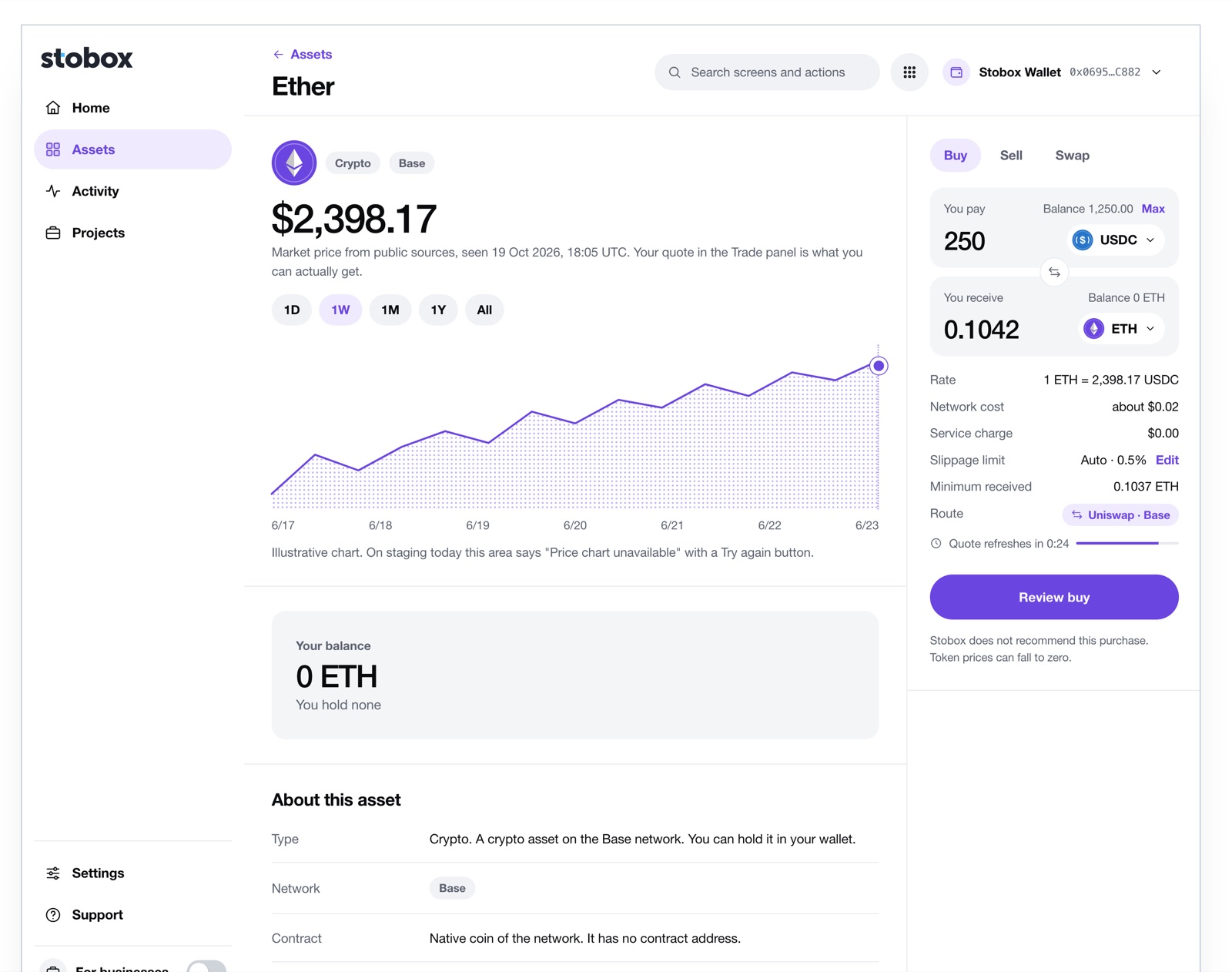
- Two prices live on the trade screen and they are not the same thing: a market price with the time it was read, and a quote you can actually take, which lasts 30 seconds.
- Costs are named as amounts, never as percentages, and the route is printed before you sign.
- Tokenized stocks are shown with their venue and a neutral link. They are not tradable inside the app at launch and are not shown to people in the United States.
- STBU has exactly two uses: paying for Stobox services at a 10% discount, and trading against the liquidity in its own pool on Base. Holding it by itself does nothing.
- Access is open and free at launch. The doors are not open yet, and we will say here when you can sign in.
Why the record comes first
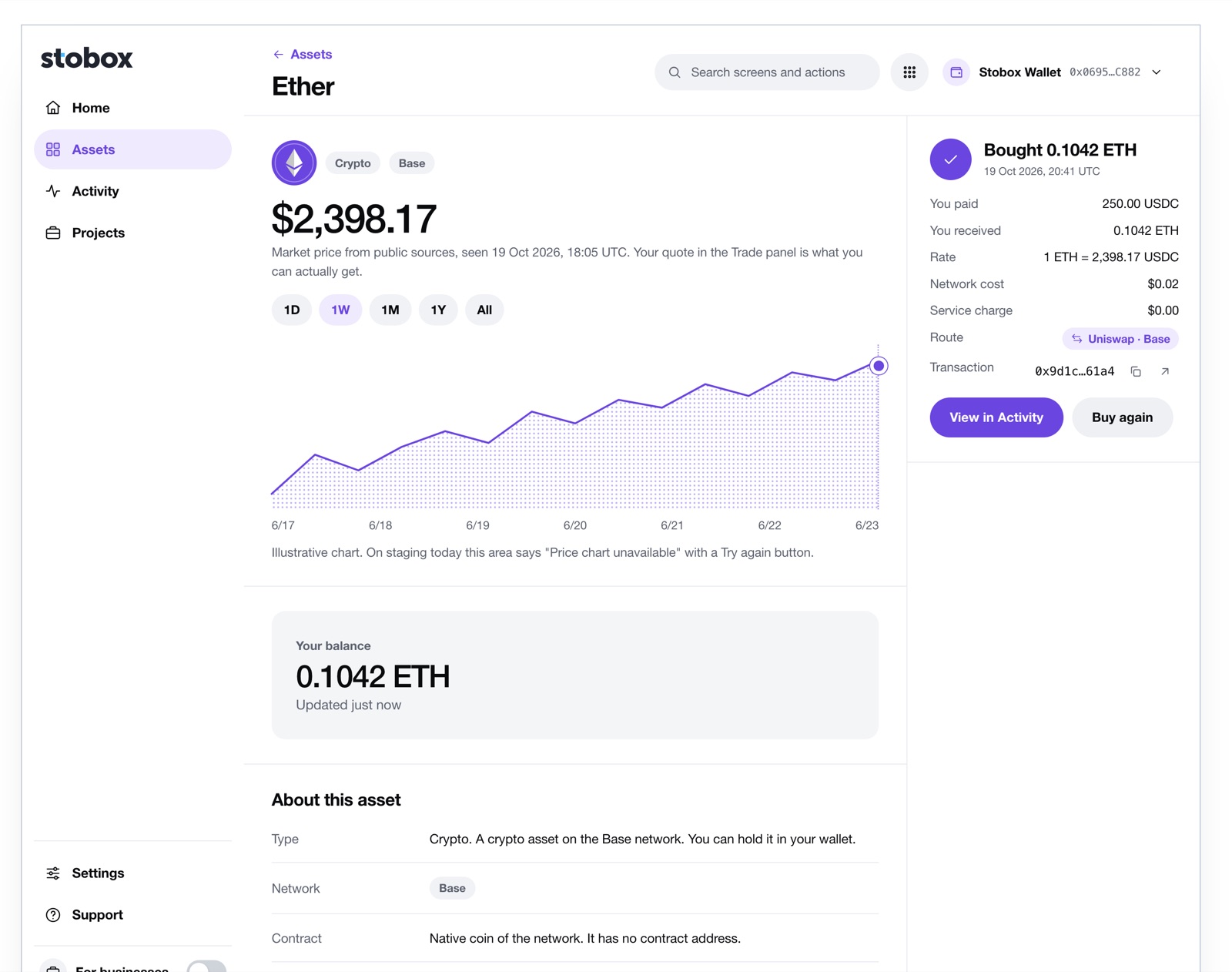
A token is a claim, and a claim you cannot read is a rumour with a contract address. The paperwork that would settle it, who the issuer is, which contract corresponds to which asset, what documents were filed, what changed and when, where the price comes from, is usually scattered across services that were never designed to reference each other. So the proof of what the asset actually is lives nowhere.
Issuance is the easy half. The hard half is maintaining a record that holds up when a buyer, a counterparty, a lawyer or an auditor reads it cold, in one place, without being walked through it. On that view, minting first and documenting later is backwards, and most of the market does it in that order.
We have spent eight years writing the records behind other people’s assets. This product is that practice, turned into something you can open yourself, without asking us first.
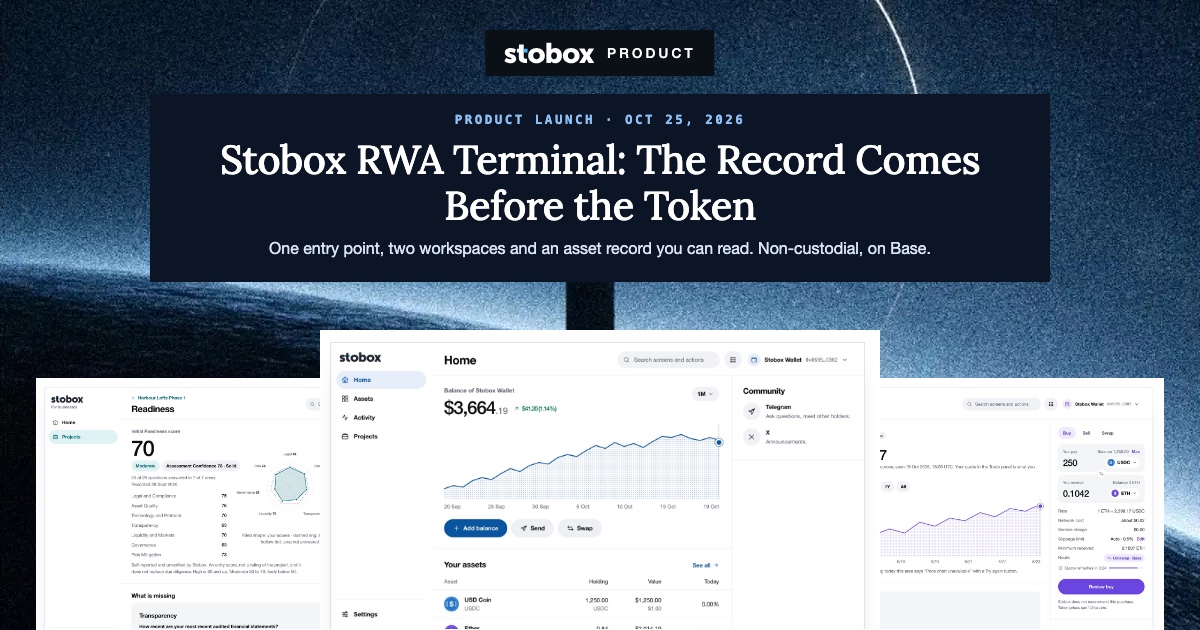
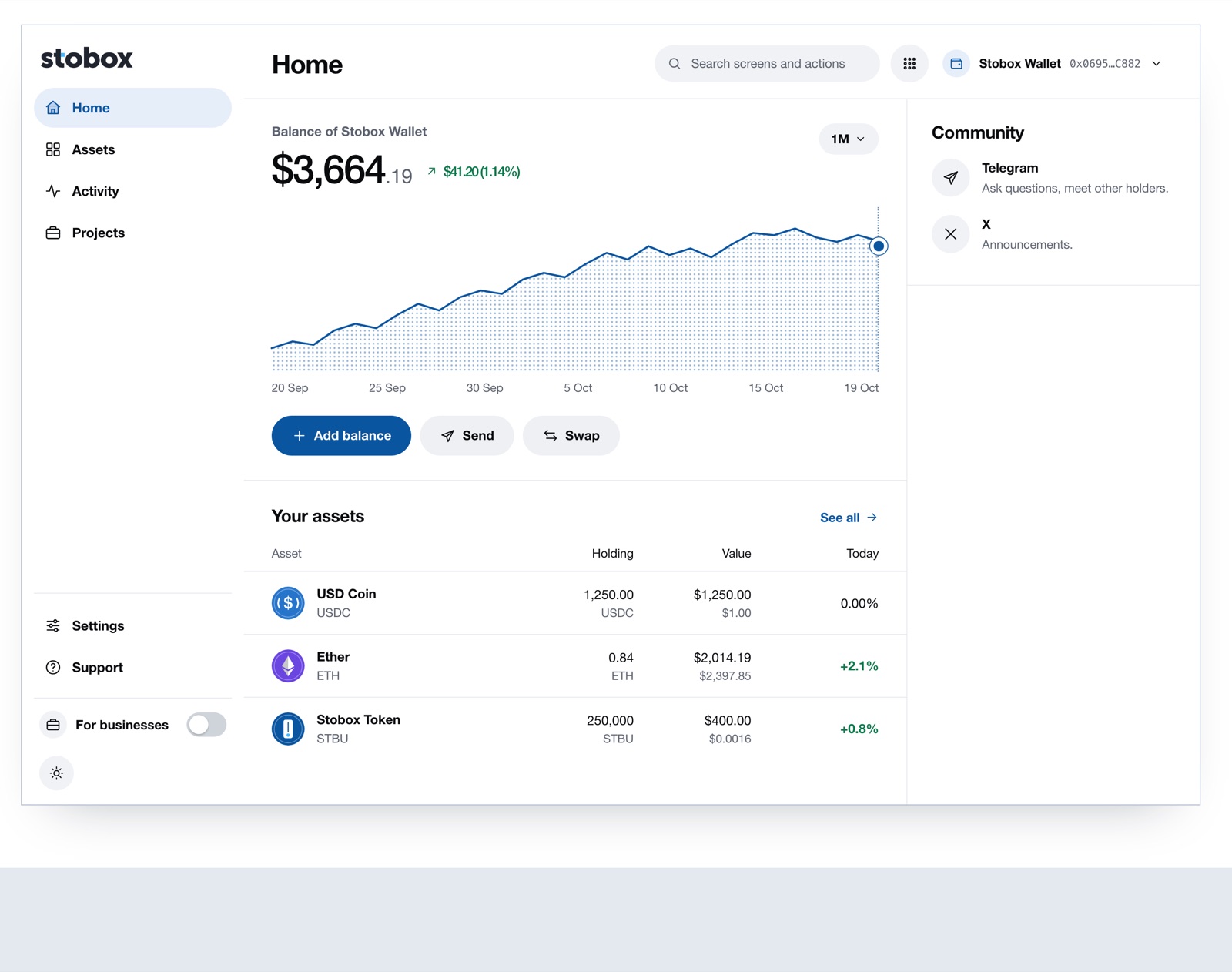
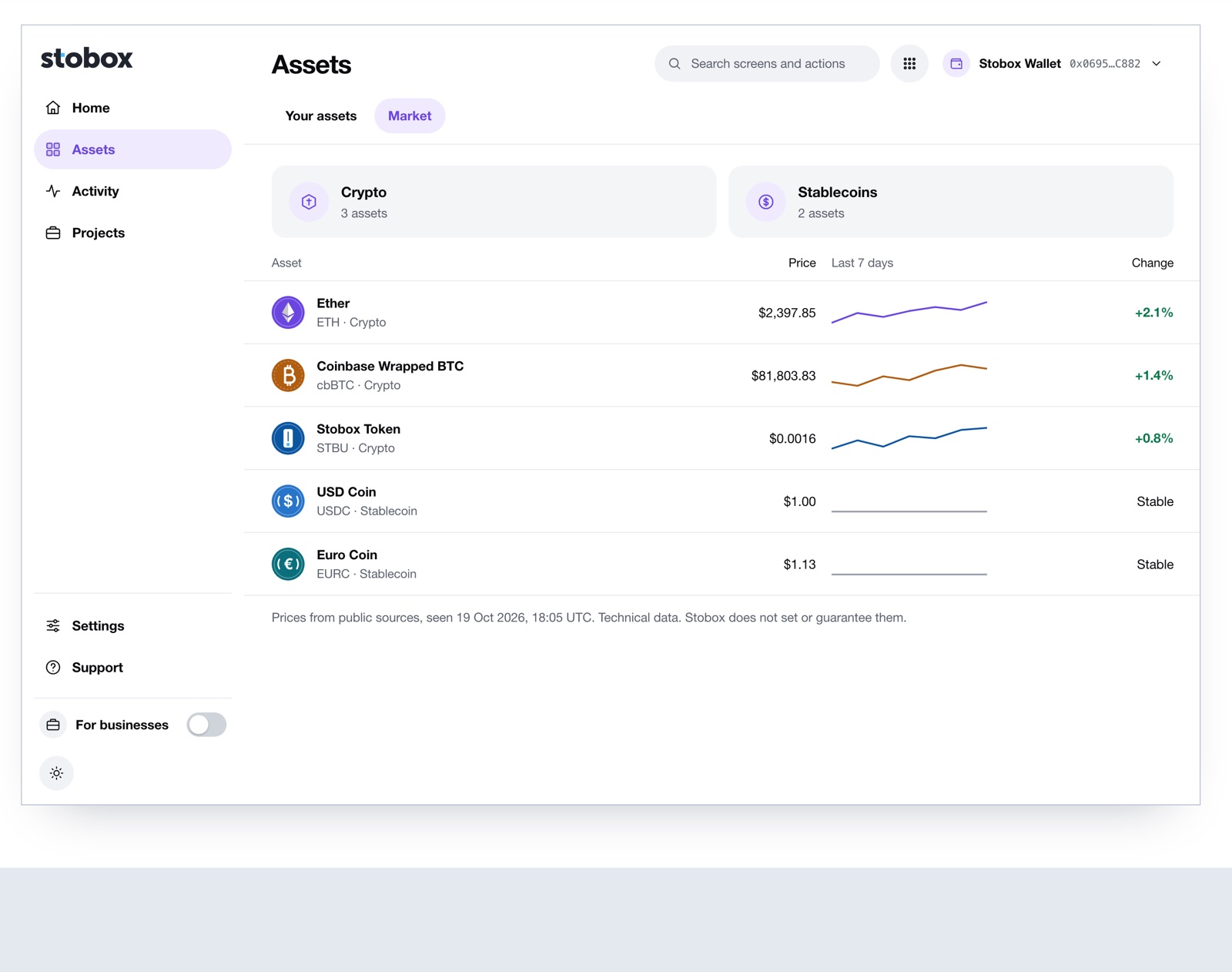
The screens below are the product’s own design, taken ahead of the public release. Balances, prices and names in them are illustrative.
What you get on day one
The individual space is a wallet and a catalogue. The business space is an organization, its projects and the record each project accumulates. The switch between them sits at the bottom of the sidebar, so moving from a personal holding to company work takes one click and no second login.
The part we argued about longest is the trade panel. The market price is a reference and carries the time it was read. The quote is what you can actually get, and it lasts 30 seconds. Costs are named as amounts, not percentages. The route is printed. The minimum you receive is printed.
For a company with an asset
If you are weighing whether to tokenize something, the first cost today is not the token. It is the discovery work: a lawyer to scope the structure, an adviser to tell you whether the asset is even a candidate, a few weeks before anyone gives you a straight answer. The Terminal moves that answer to the front and makes it free.
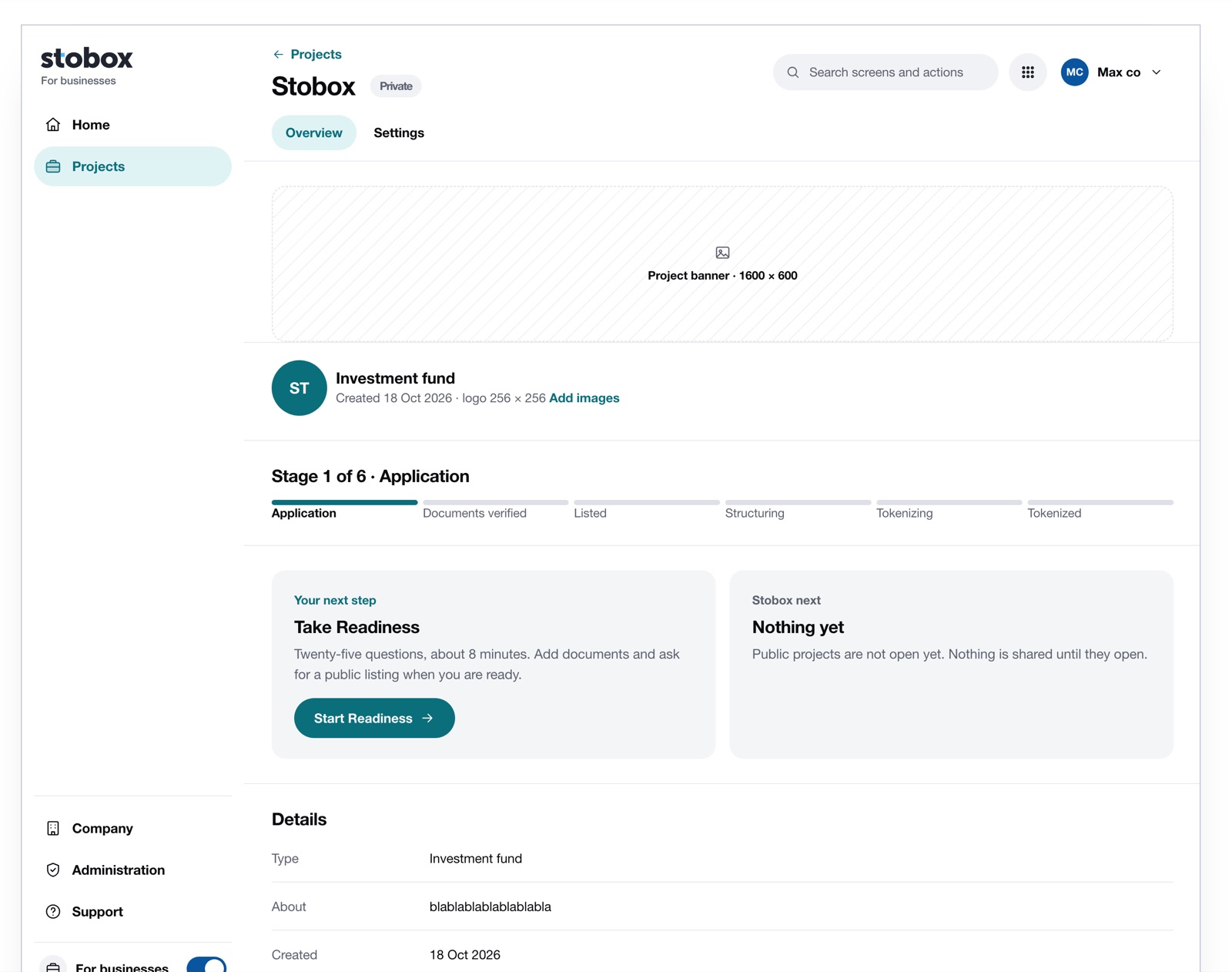
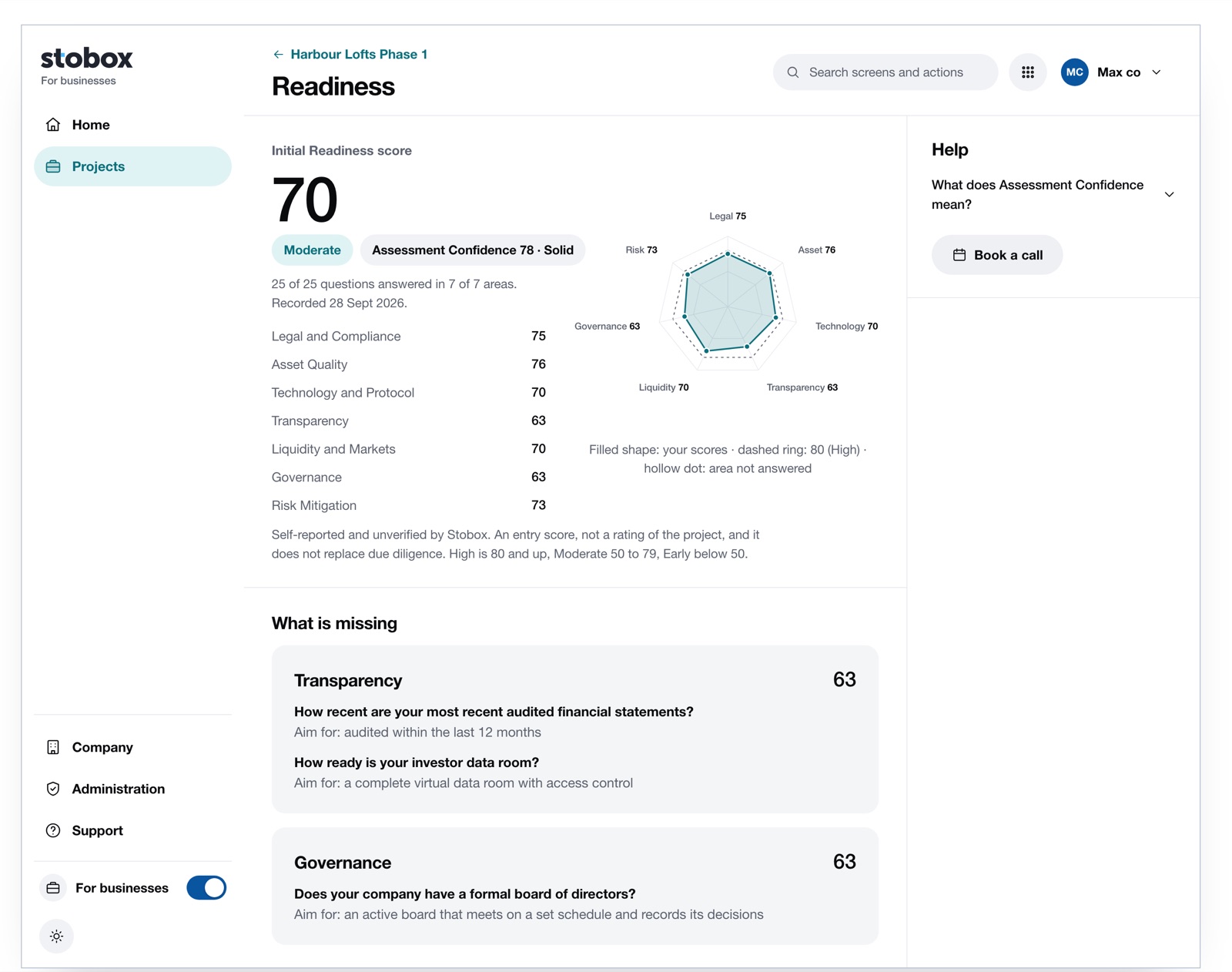
I would rather a company find out in an afternoon that its asset is not ready than find out after an invoice. We lose a few engagements that way. We also stop wasting everyone’s quarter.
What STBU does inside the product
STBU is a utility token and it has exactly two uses. It is worth being blunt about both, because a lot of tokens in this market are described in a way that makes them sound like more than they are.
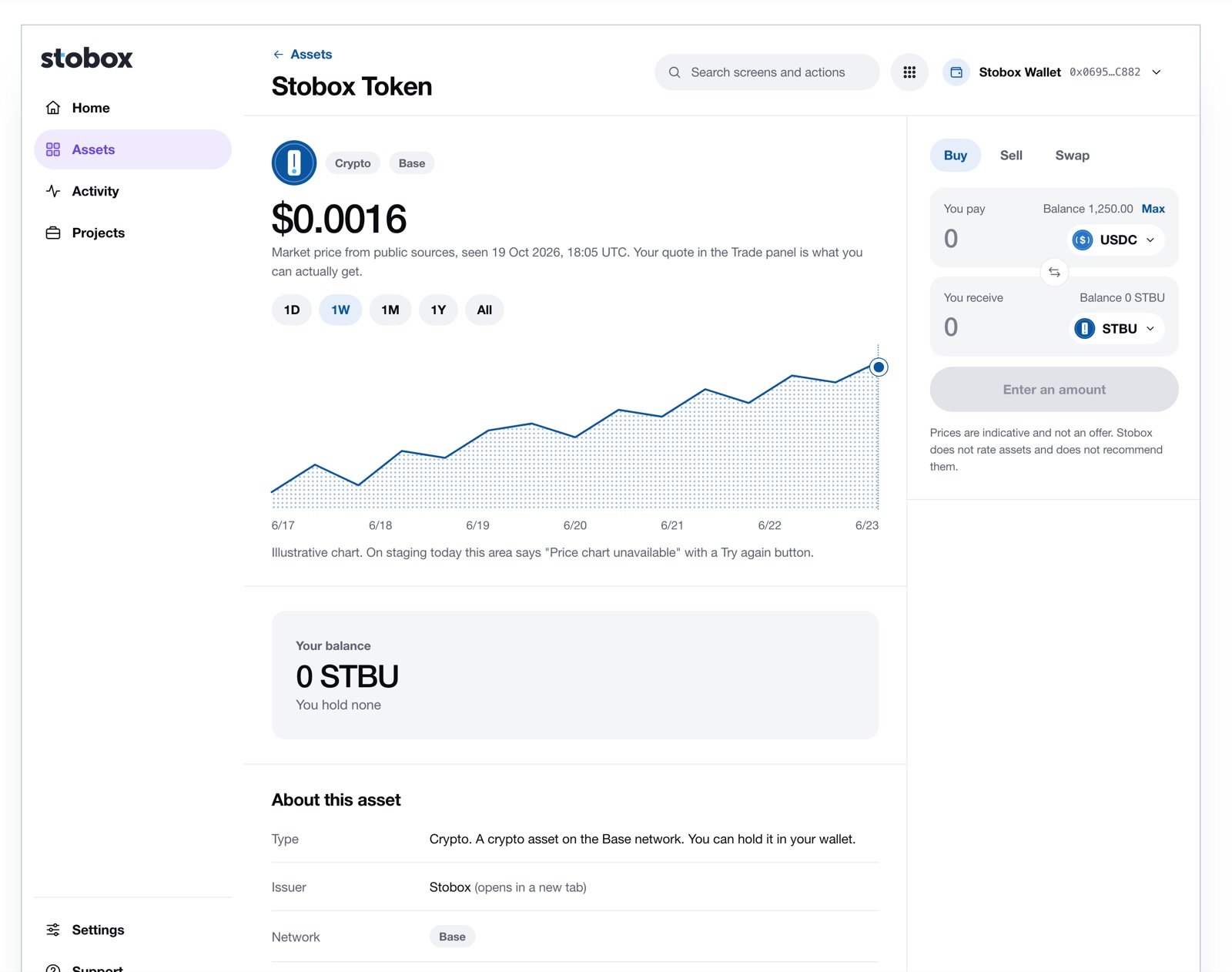
The first use is paying for Stobox services at a 10% discount. If you settle a Stobox service in STBU, the price is 10% lower than the same service paid another way. That is the entire mechanic.
The second is trading with the liquidity in its own pool on Base. You can buy and sell against that pool. What a trade costs you is shown as an amount at the moment you trade, not as a rate quoted in advance.
Holding STBU by itself does nothing. There is no income from holding it, no status, no tier, no badge, nothing unlocked by a balance. Migration claims from the old token stay open until 31 December 2026. Unclaimed tokens are not minted and go to no one. It is not a subscription, and no plan is granted or unlocked by holding it. It is not convertible into any other instrument: not equity, not debt, not a share of revenue, not another token. There is no staking yield.
I am not going to tell you what STBU will be worth. I can tell you exactly what it does: it pays for our work at a discount, and it trades in its own pool. If we add a third thing, you will read about it here, after it exists.
One entry, every Stobox product
Stobox is not one application. It is a set of products built around the same problem, and until now each one had to be found and learned separately. The Terminal becomes the entry point: where you arrive, hold your wallet and assets, see your projects, and move out to the product a given stage needs.
| Product | What it does | State today |
|---|---|---|
| Stobox RWA Terminal | The entry point: wallet, assets, trading and projects | Opens in November 2026 |
| Stobox Intelligence | A deep, structured assessment of an asset and its issuer | A separate product at its own address |
| Raisable | Raising | A separate product |
| Compass | Issuing tokens | Live |
| Orbit | Tokenization infrastructure | Research and development |
| STBU | The Stobox utility token | Live on Base |
What is shared today is exactly two things: one identity issued by the Terminal, and the nine-dot launcher that moves you between products. That is the whole list. A single sign-on across every product is future work, not something you get at launch. Moving into another product can still mean signing in there. We would rather say that plainly than let you discover it on a Monday morning.
How we handle numbers
One rule runs through the whole product, and it is the one to hold us to: a number on the screen is either read from a source or it is not there.
That rule has consequences you can check. A balance we cannot read shows a dash, not a zero, because zero is a claim and a dash is an absence. A price carries its source and the time it was read. A link that says it shows a transaction opens that transaction, not the front page of an explorer. A button that reports a trade reports a trade that happened on chain, because a button that waits and then says “done” is the most expensive kind of lie, and it is about money.
Every number on these screens either came from somewhere we can name, or it is a dash. If you find one that is neither, send it to me and we will fix it that week.
What comes next
Waves, in order. No dates, and nothing here is a promise of timing.
The first wave is better prices and a business model: a second trading route for assets whose liquidity lives somewhere other than our current one, then a service charge on trades, shown the way every other cost is shown, as an amount.
The second is more of the catalogue becoming tradable: tokenized funds added, and trading tokenized stocks inside the app for the regions where that is open.
The third is more from the same keys: Earn, meaning liquidity pools, and a smart wallet that folds approval and trade into one passkey confirmation.
The fourth is the rest of Stobox around it: Stobox Intelligence in production at its own address, and a single sign-on across products after that, not before. Then more networks.
Order matters more than speed. Each wave assumes the one before it landed and stayed landed, so a wave can move back if the one in front of it is not finished. Paid plans arrive somewhere in this stretch too, and we will say what they cost when they exist rather than before.
What we do not promise
No custody of funds: the quote comes from a router, you sign, the trade settles on chain. No guaranteed liquidity: we show the venue where an asset trades, we do not promise a counterparty. No investment advice: nothing in the product is a recommendation to buy, sell or hold anything. No promises about any token price, in either direction. Features marked “not open yet” are not available.
When you can get in
The doors are not open yet. Stobox RWA Terminal opens in November 2026, and we will say on this blog, and in the community channels, on the day you can sign in. Until then there is nothing to register for, and anyone inviting you to pay for early access is not us.