







The Register Quarter
Real-world asset tokenization, July to September 2026. The quarter was decided at the register: who keeps the book, which rules travel with the token, which money settles it. By Gene Deyev.
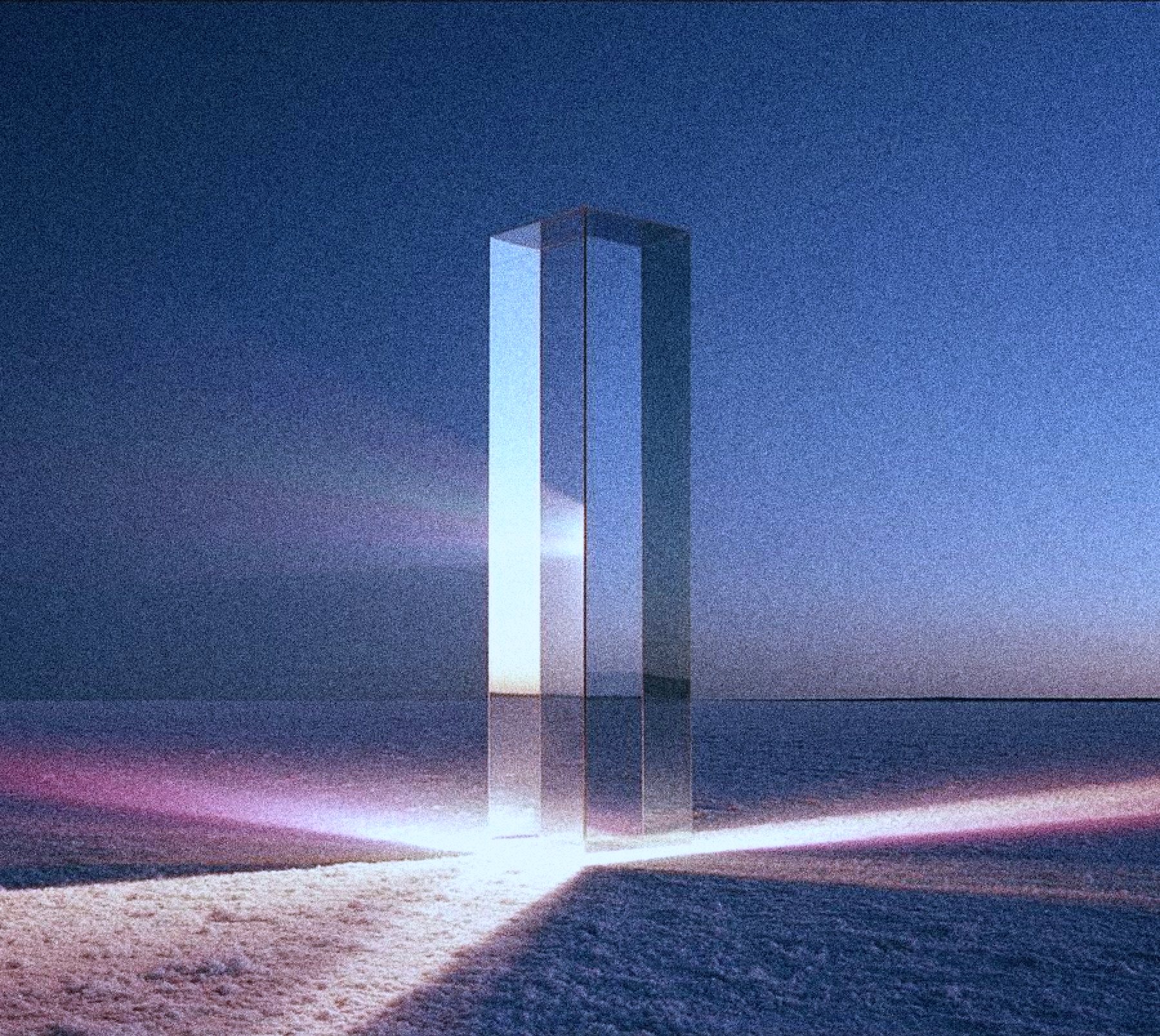
- ✓Free PDF, 43 pages
- ✓68 numbered sources
- ✓Every figure dated
Three findings the dashboards miss
The short version of chapters 1 to 5. The PDF has the charts, the sources and the caveats.
Wider, not deeper
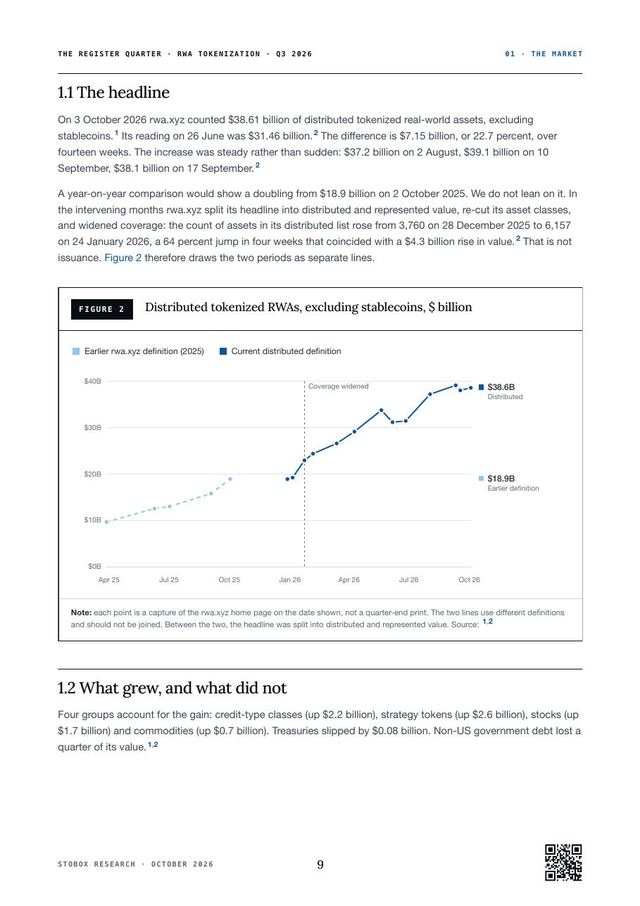
Distributed value rose 22.7 percent to $38.6 billion. Treasuries, 38 percent of the total, were flat and saw net redemptions. Holders rose 5.4 times, yet the two largest Treasury tokens have 35 and 106 holders.
Ask yourselfHow much of the growth you read about is new money, and how much is a wider tracker?
The register is the contest
DTCC ran live tokenized trades. Ondo launched custodial stocks through a registered transfer agent. The SEC let a fund family use a public chain as its system of record. The question moved from the token to the book.
Ask yourselfWho keeps the book for your instrument, and what rights does the token carry?
Law by exemption
The Senate failed to pass the CLARITY Act, 49 to 50. Two days later the SEC issued a five-year exemption for tokenized stock on public ledgers. It is capped, temporary and open to issuer objection.
Ask yourselfIf that exemption narrowed tomorrow, would your token’s rules still hold?
Six chapters, sixteen figures.
The market: wider, not deeper
Distributed value, what grew, what did not, and why Treasuries stalled.
ChartsFigures 2 to 6
Institutions: the register layer
DTCC, Ondo, Franklin Templeton, ICE and the LSE. Money funds as collateral.
ChartsFigures 7 and 8
Rails: chains, stablecoins, central bank money
Where the value sits, why stablecoin supply stood still, and five live settlement trials.
ChartsFigures 9 to 11
Rules: law by exemption
The United States, the EU, the UK, Asia and the UAE, with a public-chain matrix.
ChartsFigure 12
Fault lines: what the headline hides
Holders versus investors, concentration, idle assets, and what broke.
ChartsFigures 13 and 14
Outlook: the next ninety days
Forecasts to 2030, what would change our reading, and a dated Q4 calendar.
ChartsFigures 15 and 16
A report you can print.
A4, white pages, a full-page opener for every chapter, running headers and a QR code to Stobox on every text page.
The dashboard says up. The register says more.

Founder and CEO
Every quarter I read this market twice. First as a dashboard: how many dollars sit on a chain. Then as a register: who is the legal owner of the asset when something goes wrong.
In Q3 2026 the two readings came apart. The dashboard says tokenized assets grew about 23 percent, to $38.6 billion. That number is real, and smaller than it looks: the gain came from tokenized stocks, gold and a wider tracker, while tokenized Treasuries went sideways.
The register tells a larger story. DTCC ran live trades on tokenized securities. The SEC issued a five-year exemption for trading tokenized stock on public ledgers. The ECB opened settlement in central bank money for tokenized assets. And the US Senate failed to pass the law meant to hold it all together.
Gene Deyev
Founder and CEO, Stobox · 3 October 2026
Free, one email, no call.
You get The RWA Week as well: one email on Thursday about what changed in tokenization, written by the team that builds the infrastructure. Leave in one click.
 Talk to us
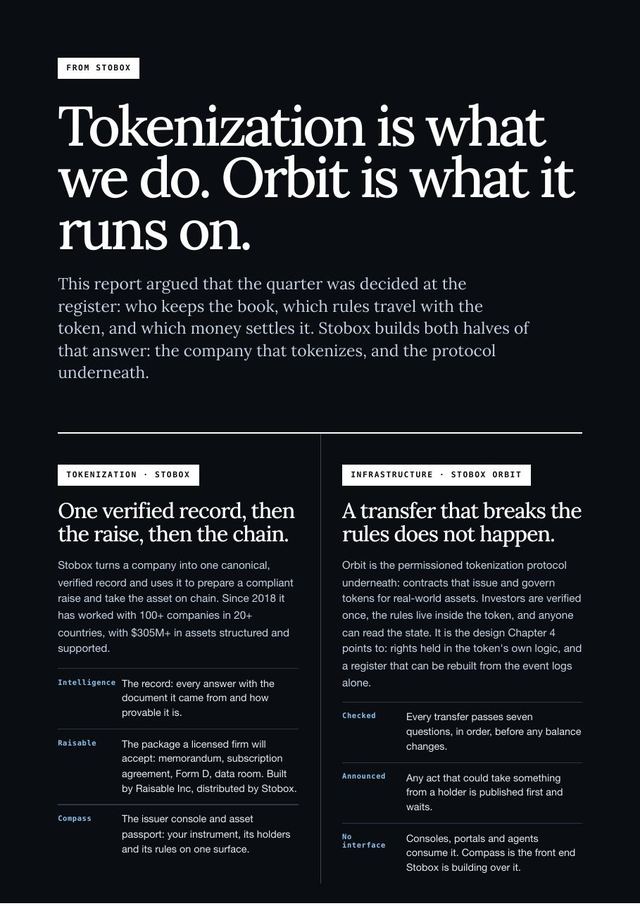
Tokenization is what we do. Orbit is what it runs on.
Stobox turns a company into one verified record and takes the asset on chain. Stobox Orbit is the permissioned protocol underneath: rules enforced on every transfer, investors verified once, and a state anyone can read. Orbit is a rehearsal on a test network today; mainnet is not deployed.
Published for information by Stobox Technologies Inc. It is not investment, legal or tax advice, and not an offer or a solicitation to buy or sell any security or token. Market data was read on 3 October 2026 and will change. The report is compiled from third-party sources, each dated and linked in the PDF; Stobox sells tokenization technology and is a backer of the ERC-7943 standard.